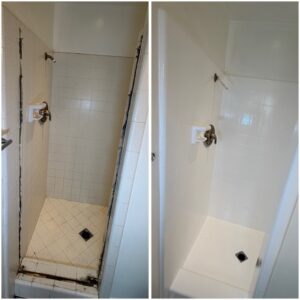
Just wrapped up a really nice tile shower project in Lake Forest. This was a comprehensive job — the kind where the customer was ready to bring the whole shower back to looking like new, and we got to do the full scope of work that goes along with that. Cracked tile repairs, fresh caulk, a full regrout, and a clean bright white spray at the end. By the time we were done, the shower looked completely renewed.
The main thing that brought us out to this house was that the shower had several cracked tiles. That’s something that happens over the years on any tile installation, especially in showers where the tile is taking on water, temperature changes, and the occasional impact. The customer had been noticing the cracks getting worse and wanted them taken care of before they got any further along. While we were going to be in there anyway, she also wanted to handle the rest of the shower at the same time — give the whole space a refresh so everything would come out looking consistent.
This is honestly the smart way to approach it. Once you’ve got the bathroom prepped and we’re already working on the shower, doing the additional steps adds way less time than doing them as separate projects later would. So we scoped the whole thing — repairs, regrout, caulking, and reglaze — and got started.
The first part of the day was a thorough cleaning of the entire shower. Tile showers collect a lot more buildup than people realize, especially down in the grout lines where soap residue, water minerals, and body oils settle in and stay. We worked each grout line individually with a brush to lift all of that out and get the whole tile field back to a clean, neutral surface. This step doesn’t sound exciting, but it’s the foundation that everything else sits on top of. The cleaner the surface, the better the bond between the tile and the new coating, and the longer the finish is going to hold up.
Once the shower was clean, we moved into the tile repairs. The right way to fix a cracked tile on a project like this isn’t to just smear filler over the top and hope it holds. We drilled out each cracked area first, opening it up past the damage to clean, solid tile around the edges. That gives the repair material a real cavity to grip into, instead of sitting on top of unstable material. Then we filled each cavity with fiberglass body filler. Fiberglass is the right choice for this because it bonds hard, cures dense, and once it’s set it isn’t going anywhere. After the filler cured we smoothed everything flush with the surrounding tile so each repair would disappear under the new coating. Done right, you can run your hand across the area where the crack was and not feel anything.
After the tile repairs were squared away, we moved into the full regrout. As we got into the cleaning earlier, it became clear that the grout throughout the shower was inconsistent — fine in some spots, thin or worn in others, and the recent damage around the cracked tiles meant some of those joints had been disturbed too. Rather than patch grout in some spots and leave the rest, we did a full regrout so the whole shower would have uniform, fresh grout running through every line. Patched grout in some spots and old grout in others would have shown up later as a subtle inconsistency under the new bright white finish, and the customer wanted the whole shower coming out clean and even. Full regrout was the right call. We worked through every grout line, filled it clean, and let everything cure properly before moving on.
Then we ran fresh caulking all the way around the shower where it meets the surround. New caulk before the spray means it gets coated along with the rest of the surface, so the final result has a clean, continuous transition between the shower and the walls instead of a separate caulk bead sitting on top of the finish. Looks better, seals better.
With all the prep work wrapped up — cleaning, crack repairs, regrout, and caulk — the shower was ready for the spray. But first we masked the entire bathroom. Plastic and paper over the floor, the vanity, the toilet, the mirror, the fixtures, anything outside the shower itself. Masking always takes some real time to do well, especially on a shower this size, but it’s what keeps the rest of the room untouched while we work. Worth taking the time.
After the masking was set, we got our ventilation system running to pull fumes out of the house during the spray. Standard practice on every job. It keeps the air in the rest of the home clear and makes the workspace comfortable.
For the spray, we laid down our coating across the whole shower in bright white. Multiple coats, building up the depth and gloss the way we like to see it, working slowly so every part of the tile field got even coverage. We let everything cure properly before pulling the masking down.
When the bathroom came out from under the plastic, the difference was striking. Fresh grout running clean through every line, repaired tile sitting completely flush and invisible, a beautifully even bright white finish across the whole space, and clean caulk lines around the perimeter. The shower felt brand new.
The customer was thrilled with how it all came together. A combination project like this — repairs, regrout, caulk, and reglaze, all done at once — gives you the kind of result that feels like a full remodel without the cost or disruption of one.
If your tile shower has some cracked tiles, worn grout, or just looks tired overall, taking care of everything together is usually the smart move. Give us a call and we’ll come take a look at what you’ve got and walk you through what your shower needs.
For more information you check out our Blog or FAQ.